
Friday, August 31, 2012
Statistics August

THREAT two brothers
 |
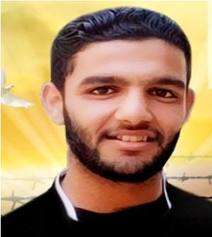
| The arrest of two brothers from Bethlehem Ismail Abdullah Arouj (27) was arrested at dawn "29_8_2012" he was just released 4 days ago out of more than five years of imprisonment. While his wife was staying with their little daughter in hospital. The process of re -arresting Ismail was 18 days after the arrest of his brother Ibrahim, sentenced to 6 months of administrative detention. August 31, 2012 |
THREAT Hani Abu Sabaa
 |
| According to the
Ahrar Center for the Study of prisoners and human rights, his health is
deteriorating dramatically, because in Megiddo prison medical care was
denied. The only treatment meted out to him were suspiciou
s injections.
Following protests by prisoners on the matter, Abu Sabaa was conveyed under extremely difficult circumstances to Ofer prison and here: doing nothing, in spite of an agreement on his treatment by Doctors Without Borders / Red Cross. Abu Sabaa suffers now, because of kidney stones, at a severe generalized infection and an old fracture in his left foot. Signs of torture during Israeli 'hearing'. The Israeli court is claiming that Abu Sabaa is dangerous to the security of the country, is also claiming that the prisoner belongs to the organization Hamas and that he has a leadership role within the prison. August 29, 2012 |
THREAT Hunger Strikers since MAY 2012
 |
Israeli court extends the remand of Samer Al Issawi and refuse him to see his lawyer.
Samer Al Issawi was re- arrested on Saturday 07 July 2012. He spent the last ten years in israeli jail.
He is on hunger strike til then.
Note : Kindly notice, all prisoners released in the ‘Shalit-deal’ received a “Presidential PARDON” (= Amnesty) of Pres. Perez yet many are re-arrested again without charges nor trial.
UPDATES AUGUST ....and happening: NOTHING !!!
Israeli occupation authorities prolonged the detention of Samir El-Barq and Samir Isawi, He had have a sentence of actual imprisonment to 30 years. He spent ten years in jail and was freed last year due to prisoner swap deal. Israeli occupation authorities renewed aswell the administrative
arrest, for three months, against Samer el-Barq, in spite of the promises of releasing him of is hunger strike
Jawad Polos, Head of the Lawful Unit at the Palestinian Prisoner Society said that the court of Ofer was held for renewing the detention, in spite of the absence of el-Barq; he is in the hospital of Asaph Hroophe, after 100 days of hunger strike. The Israeli occupation authorities said that there was no importance for keeping Samer in jail, but still detain him and renew the arrest. Samer had been arrested 30 months ago without real charges being filed, so he had started the food strike 100 days ago, protesting on detaining illegally. His wife in Pakistan is waiting his freedom to gather family. Polos added that Hasan el-Safadi, who has been striking for freedom since the middle of June, is in the hospital of Ramlah, suffering in a bad health condition August 29, 2012 |
Saturday, June 16, 2012
THREAT Mahmoud Sarsak
 |
Date of Birth: 20 January 1987
Place of residence: Rafah Refugee Camp, Gaza
Occupation: University student and member of the Palestinian national football team
Date of arrest: 22 July 2009
Place of detention: Ramleh prison medical center
Mahmoud Sarsak is currently the
only individual held under Israel’s “Unlawful Combatants Law,” which
allows for Palestinians from Gaza to be detained for an unlimited amount
of time without charge or trial. Mahmoud began a hunger strike on 19
March 2012 and entered his 80th day on 6 June, making him the
longest hunger striker in Palestinian history. His health is rapidly
deteriorating and he is demanding his immediate release.
ARREST
Mahmoud Sarsak was arrested on 22
July 2009 by Israeli Occupying Forces (IOF) at Erez checkpoint while
attempting to cross to the West Bank from Gaza in order to participate
in a football match in Balata refugee camp. Mahmoud, who was 22 years
old at the time, was a member of the Palestinian national football team
and had obtained permission to travel through Erez checkpoint and enter
the West Bank.
Following his arrest, Mahmoud was
transferred to interrogation at Ashkelon. He was held in interrogation
for a total of thirty days, during which he was questioned about alleged
affiliation to the Islamic Jihad political party. No evidence was
provided to elucidate these claims and Mahmoud rejects the allegations.
A recent Amnesty International report further notes:
“According to his lawyer, during
interrogation Mahmoud Sarsak was tied to a chair and kept sitting for
long hours at a time in a stress position with his arms tied behind his
back and to a pole in the floor—a practice known as shabeh. Mahmoud
Sarsak’s family were not notified of their son’s arrest and whereabouts
until two days after his arrest. […] Upon learning of his arrest, the
family appointed a lawyer who was unable to see Mahmoud Sarsak for the
first ten days because the Israeli Security Agency prevented him from
doing so.”
UNLAWFUL COMBATANTS LAW AND HUNGER STRIKE
On 23 August 2009, Mahmoud was given a
detention order under Israel’s “Unlawful Combatants Law.” This law
allows for Palestinians from the Gaza Strip to be detained for an
unlimited amount of time without being charged or brought to trial.
Under this law, detainees are issued a permanent detention order and are
then brought before an Israeli District Court only once every six
months for judicial review of their order. In practice, the Unlawful
Combatants Law contains fewer protections for detainees than even the
few that are granted under administrative detention orders in the West
Bank.
As per customary Israeli practice,
Mahmoud would have obtained security-clearance from Israeli authorities
prior to being granted permission to cross the Erez checkpoint. This
raises serious questions about the validity of the alleged concern on
the part of Israeli authorities that justifies his detention under the
Unlawful Combatant Law. As in the case of administrative detainees,
Mahmoud’s detention is based on secret information collected by Israeli
authorities and not available to Mahmoud or his lawyer. This practice
violates international humanitarian law, which permits some limited use
of internment in emergency situations, but requires that the authorities
follow basic rules for detention, including a fair hearing at which the
detainee can challenge the reasons for his or her detention. These
minimum rules of due process have been clearly violated in Mahmoud’s
case, leaving him without any legitimate means to defend himself.
After nearly three years of detention
without charge or trial, and as part of a growing movement among
Palestinian political prisoners, Mahmoud launched a hunger strike on 19
March in protest against the latest extension of his detention. After
launching his hunger strike, he was transferred to Ohalei Keidar prison
on 8 April. He was then held in solitary confinement at Eshel prison
until his transfer to Ramleh prison medical center on 16 April as a
result of his deteriorating health.
At one point during his hunger
strike, Mahmoud was promised that his detention would not be extended
and he would be released on 1 July if he agreed to end his hunger
strike. Since he insisted to have the agreement in writing, the offer
was withdrawn. Mahmoud refused an Israeli proposal to deport him to
Norway for three months and then return. He was not included in the
final agreement that ended Palestinian prisoners’ mass hunger strike on
14 May, either in its written or oral form. When he inquired as to the
date of his release, Mahmoud was told that it will only be considered at
the next date of judicial review for his detention, on 22 August.
During a visit with Addameer lawyer
Mona Neddaf on 23 May, Mahmoud’s health was in such grave condition that
he could only speak with her for a matter of moments. Despite the
urgency of his condition, the Israeli Prison Service (IPS) denied
Mahmoud access to independent doctors from Physicians for Human
Rights-Israel (PHR-Israel) until 6 June, his 80th day of
hunger strike. This visit was only permitted after numerous petitions
filed to the Israeli District Court. The IPS also refuses to transfer
him to a civilian hospital for proper treatment.
Following the visit, the PHR-Israel
doctor reported that Mahmoud has experienced extreme loss of muscle
tissue and drastic weight loss. He has lost 33 percent of his body
weight, from an original weight of 76 kilos down to his present weight
of 51 kilos. He also suffers from frequent incidents of fainting and
loss of consciousness, in addition to lapses in memory. The doctor
further reported that Mahmoud is in danger of pulse disruptions
(arrhythmias) that are endangering his life. PHR-Israel's independent
doctor strongly recommended that Mahmoud be immediately transferred to a
hospital, as he is now at immediate risk of death.
MAHMOUD AND HIS FAMILY
Mahmoud hails from an athletic family
and joined the Rafah Sports Club when he was only 8 years old. Football
quickly became his favorite hobby and he started playing with the adult
team at 14 years of age, due to his outstanding skill. When he joined
the Palestinian national football team as a center forward, he was its
youngest player. Mahmoud also represented Palestine in football matches
all around the world, including Norway, Turkey, Egypt, Qatar and Iraq.
In addition to playing professional football, Mahmoud was also in his
third year of university, concentrating in Information Technology
Studies, before he was arrested.
Mahmoud’s family consists of his
father, who is 70 years old, his mother, who is 60 years old, his seven
brothers and five sisters. None of his family members have seen him
since the day he was arrested, as family visits for prisoners from Gaza
have been denied since 2007. Mahmoud has been denied all requests for
phone calls to his family.
This lack of contact has been
particularly difficult for his family given that his father currently
suffers from heart disease and is undergoing medical treatment in Egypt.
Mahmoud has also not been allowed to receive any items from his family
such as clothes and books, despite his family’s continuous attempts to
provide them to him through the International Committee of the Red
Cross. Mahmoud’s only means of communicating with his family has been
through his lawyer and even these visits are not permitted on a
consistent basis.
****
ACT NOW!
|
Saturday, May 26, 2012
a very bitter taste of life... Dirar Abu Sisi
 |
Veronika Abu Sisis Appeal on Dirar....At 31 May will be held the hearing Journalists are a puppet who has no control over the excessive violence that simply can lay siege to the service of those in power! With all my heart, I please you to come and not to watch silently as they, blatantly unfair, buried alive, to beg, to trample and kill us! Do not be puppets! Fear God, not them ! Wake up ! written on April 30th, 2012 |
Subscribe to:
Posts (Atom)